

Copper water vessels—traditionally known as Tamra Jal containers—have surged in popularity as people look for natural ways to upgrade their hydration routines. However, switching from a basic glass or stainless steel pitcher to an elementally active metal requires a bit of know-how.
Before purchasing a copper water dispenser for your home or office, here is a complete breakdown of material purity, health science, usage rules, and long-term maintenance.
1. Material & Authenticity
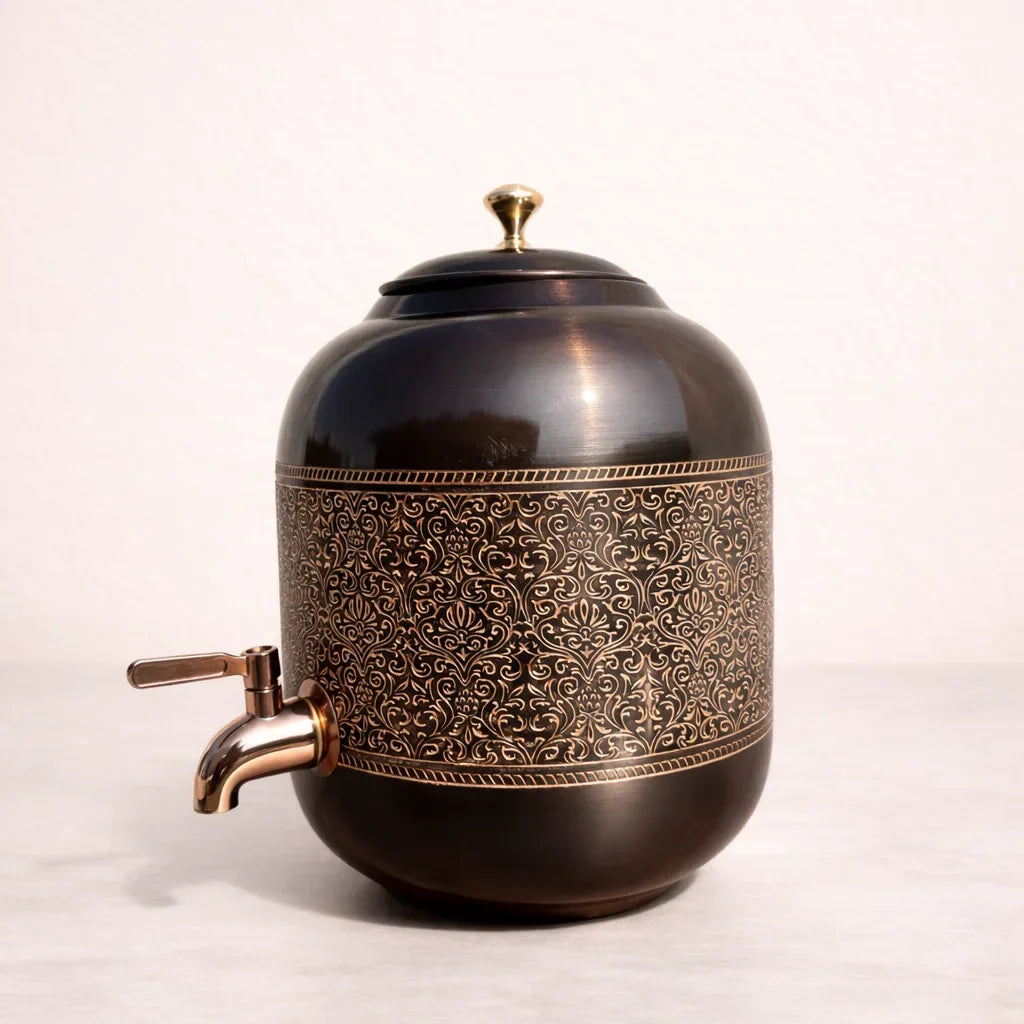
How do I make sure the dispenser is made of 100% pure copper?
Authentic copper displays a warm, reddish-gold luster, feels distinctly heavy for its size, and naturally darkens when exposed to air. To verify purity:
- Check the Weight: Pure copper is dense; cheap aluminum alloys with copper plating feel noticeably lightweight.
- Magnet Test: Real copper is non-magnetic. If a magnet sticks to the vessel, it contains iron or steel alloys underneath.
- Natural Tarnish: If the inside never turns dark or spotty after weeks of holding water, it is either synthetic or heavily coated with plastic lacquer.
Are all copper water dispensers pure copper on the inside?
No. Many budget dispensers use thin sheet metals coated with copper plating or synthetic sealant on the interior. Always look for unlined, food-grade pure copper interiors (ideally 99% or higher purity). An inner lining prevents water from interacting directly with the metal, rendering the natural copper infusion process ineffective.
How do I spot an unlined interior vs. a lacquer or tin lining?
- Unlined Copper: Has a raw, slightly matte metallic surface inside. It oxidizes naturally, developing brown or dark spots when exposed to water.
- Lacquer Coated: Remains shiny, polished, and perfectly bright even when filled with water for days. Lacquer is fine for the exterior to prevent fingerprints, but dangerous or useless on the interior.
- Tin-Lined (Kalai): Has a silver-grey metallic lining inside. Tin lining is essential for copper cooking pots used with hot or acidic foods, but for room-temperature drinking water, an unlined interior is required to allow trace ion release.
2. Health & Science
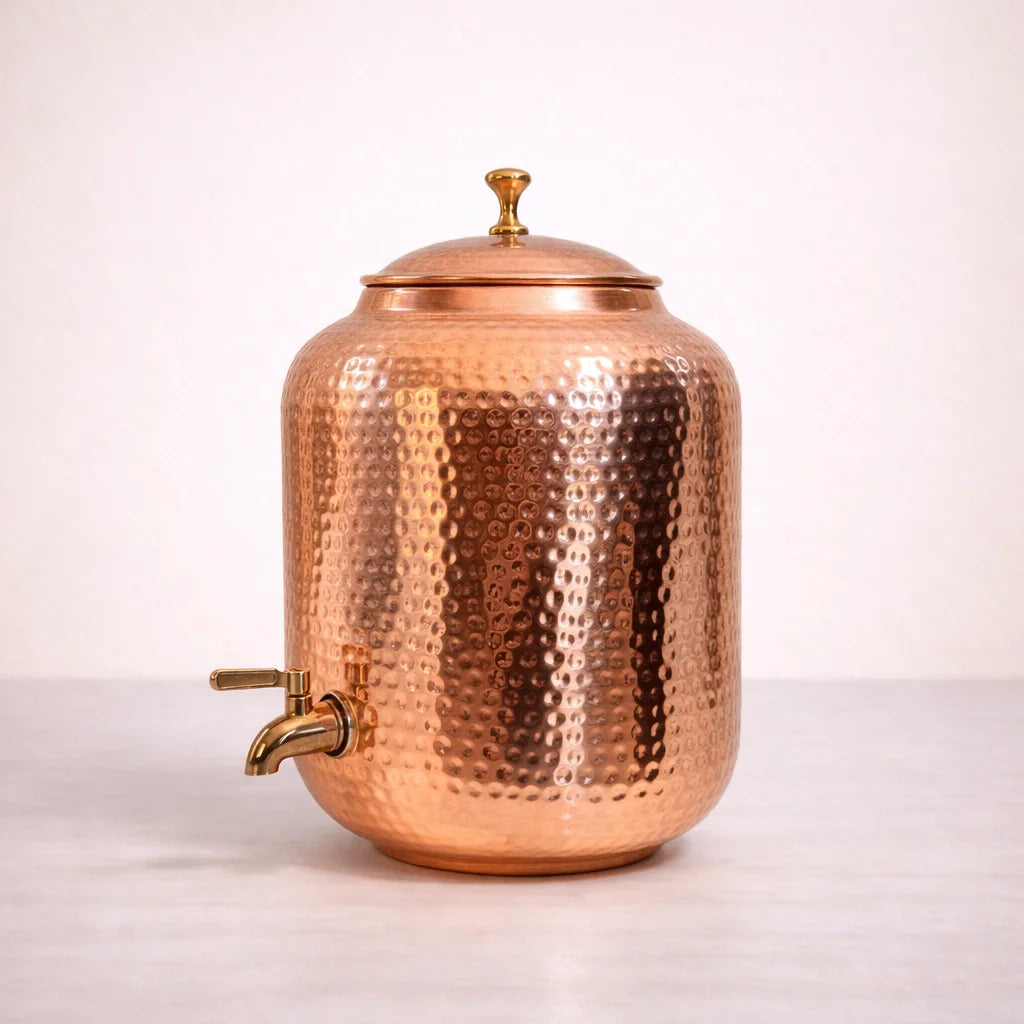
What are the actual science-backed health benefits?
When water rests in a raw copper container, minute trace amounts of copper dissolve into it—a natural process known as the oligodynamic effect.
- Antibacterial Action: Peer-reviewed studies show that copper surfaces actively eliminate common waterborne pathogens like E. coli and Salmonella over 8 to 16 hours.
- Digestive & Immune Support: Copper acts as an essential trace mineral that aids iron absorption, supports brain tissue development, and promotes healthy gut function.
How long does water need to sit in the dispenser?
To allow sufficient ion transfer and antibacterial activity, water should sit undisturbed for 6 to 8 hours (ideally overnight). Filling a dispenser and immediately tapping it out will not provide the intended mineral benefits.
Can drinking from a copper dispenser cause copper toxicity?
When used correctly with plain water, the risk of toxicity (hypercupremia) is extremely low. Studies confirm that water stored in pure copper for up to 16 hours leaches roughly 0.18 mg/L of copper—well below the World Health Organization (WHO) safety limit of 2.0 mg/L. Toxicity generally only occurs if acidic liquids are stored inside or if corroded, uncleaned vessels are used continuously.
3. Usage & Compatibility
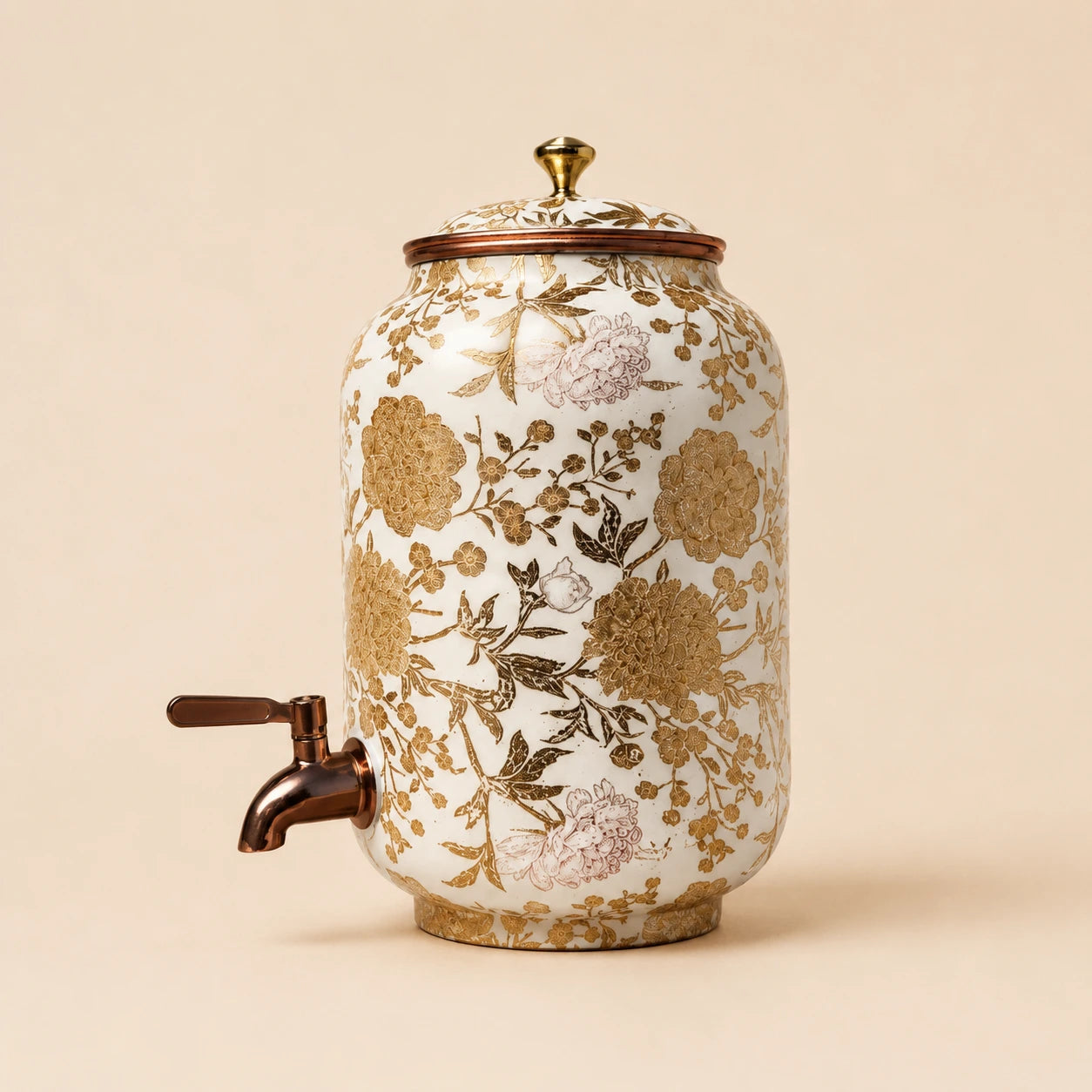
Mandatory Rule: Unlined copper is a highly reactive metal. Only store plain, room-temperature or cool water inside your dispenser.
| Liquid Type | Safe in Copper Dispenser? | Why? |
| Filtered / RO Water | Yes | Safe, neutral pH ideal for daily hydration. |
| Tap / Boiled Water | Yes (room temp) | Safe once cooled. Boiling water accelerates metallic leaching. |
| Lemon / Citrus Water | No | Acids react aggressively with copper, creating toxic copper salts. |
| Hot Tea / Coffee / Milk | No | Heat and complex organics cause rapid chemical corrosion. |
| Carbonated Drinks / Juices | No | Low pH levels degrade the inner metal rapidly. |
Is it safe to drink copper-infused water all day?
It is best consumed in moderation. Most health practitioners suggest drinking 1 to 2 glasses (approx. 300–500 mL) first thing in the morning on an empty stomach, followed by regular filtered water throughout the rest of the day. Taking a 1-week break after every month of daily use is also a recommended practice to let your body naturally cycle its mineral stores.
4. Design & Functionality
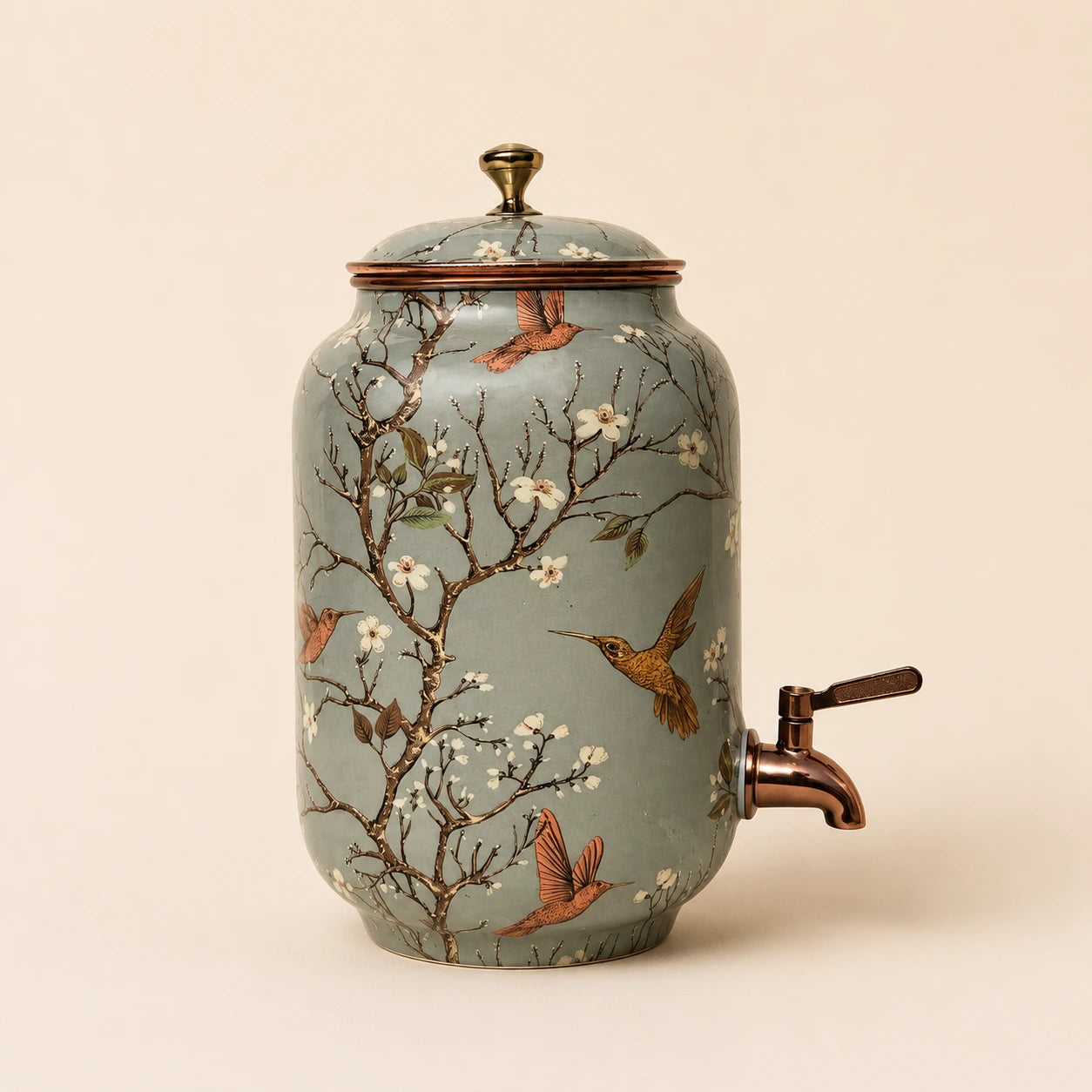
What size and capacity should you choose?
- 3L to 5L Capacity: Ideal for singles or small households (1–3 people).
- 8L to 10L Capacity: Best for larger families (4+ members) to ensure everyone can enjoy a glass in the morning without constantly refilling and waiting 8 hours.
Brass vs. Stainless Steel vs. Plastic Taps
- Brass Taps: Match the traditional aesthetic well, but require periodic checking to prevent stiffening or oxidation around the thread.
- Stainless Steel Taps (Food-Grade 304): The most durable, leak-resistant, and hygienic option. They do not react with water or degrade over time.
- Plastic Taps: Lightweight and cheap, but susceptible to cracking, stripping threads, and leaking under pressure over time.
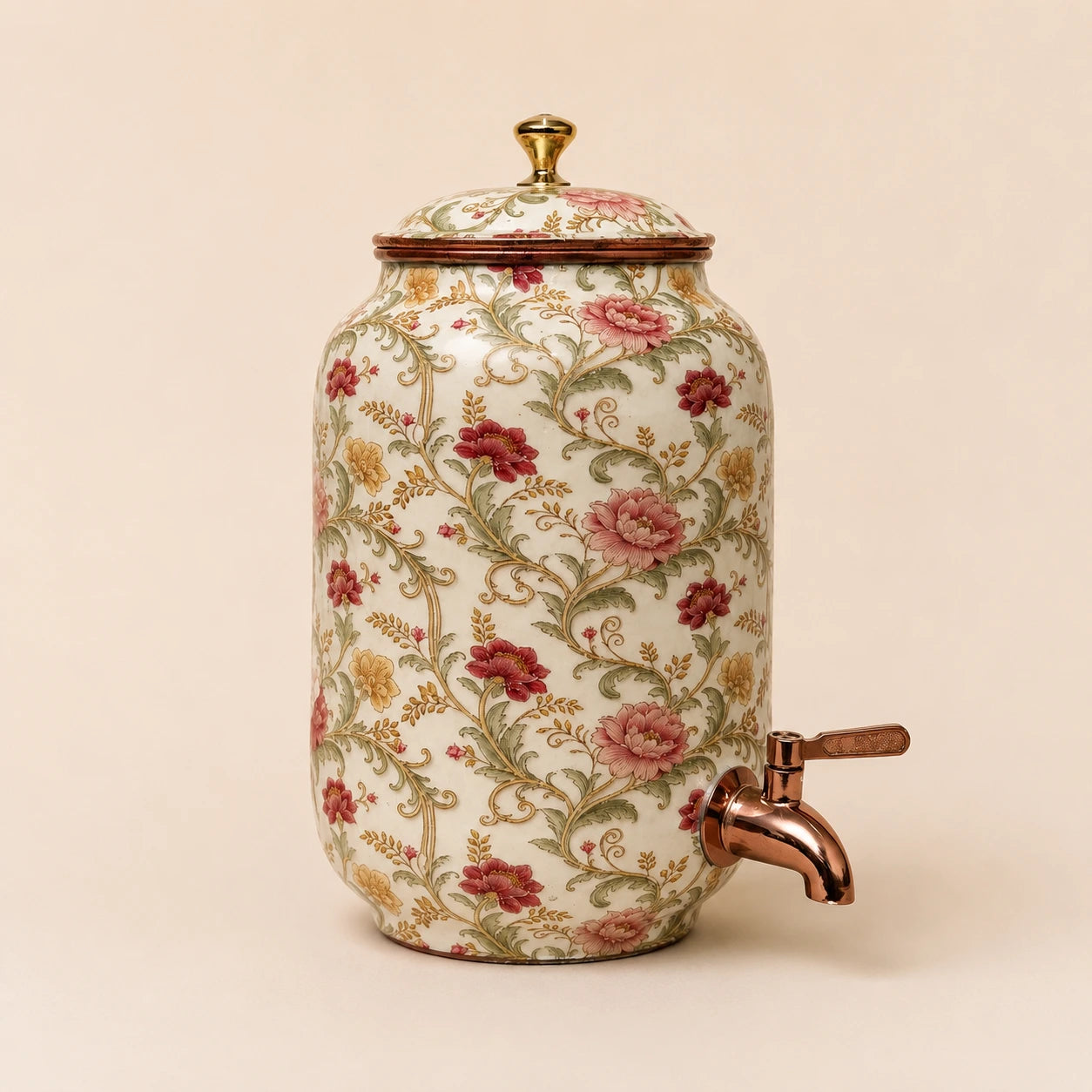
Hammered vs. Polished vs. Printed Exteriors
- Hammered Finish: Creates small textured indentations across the surface. Excellent at hiding minor scratches, dents, and natural oxidation spots.
- Smooth Polished: Offers a sleek mirror look, but shows fingerprints, water marks, and tarnish more prominently.
- Printed / Lacquered Exterior: Features decorative patterns with a clear coat on the outside. Keeps the exterior shiny with zero polishing needed, while maintaining a raw interior.
5. Maintenance & Longevity
Why does the dispenser turn dark or green inside?
This natural discoloration is called patina (copper oxidation). When raw copper interacts with oxygen and minerals in water, it forms a protective oxidation layer. It is completely non-toxic and serves as proof that your vessel is made of genuine, unlined metal.
How do you clean the inside without scratching it?
Avoid steel wool, harsh scouring pads, or chemical dish soaps, as they strip the soft metal and leave chemical residues.
- Natural Agitation Method: Add 2 tablespoons of lemon juice (or tamarind paste) and 1 tablespoon of coarse salt inside the dispenser.
- Scrub Lightly: Add half a cup of warm water, seal the lid, and swirl/shake vigorously for 1 to 2 minutes.
- Rinse & Dry: Flush thoroughly with clean water and immediately pat completely dry with a soft cloth to avoid instant water-spot oxidation.
How do you prevent leaks around the tap area?
- Ensure the dispenser comes with food-grade silicone washers (gaskets) on both the inside and outside of the tap wall.
- Avoid over-tightening the tap nut, which can pinch or tear the silicone seal.
- Hand-wash around the tap seal gently—never pour boiling water over rubber washers.


